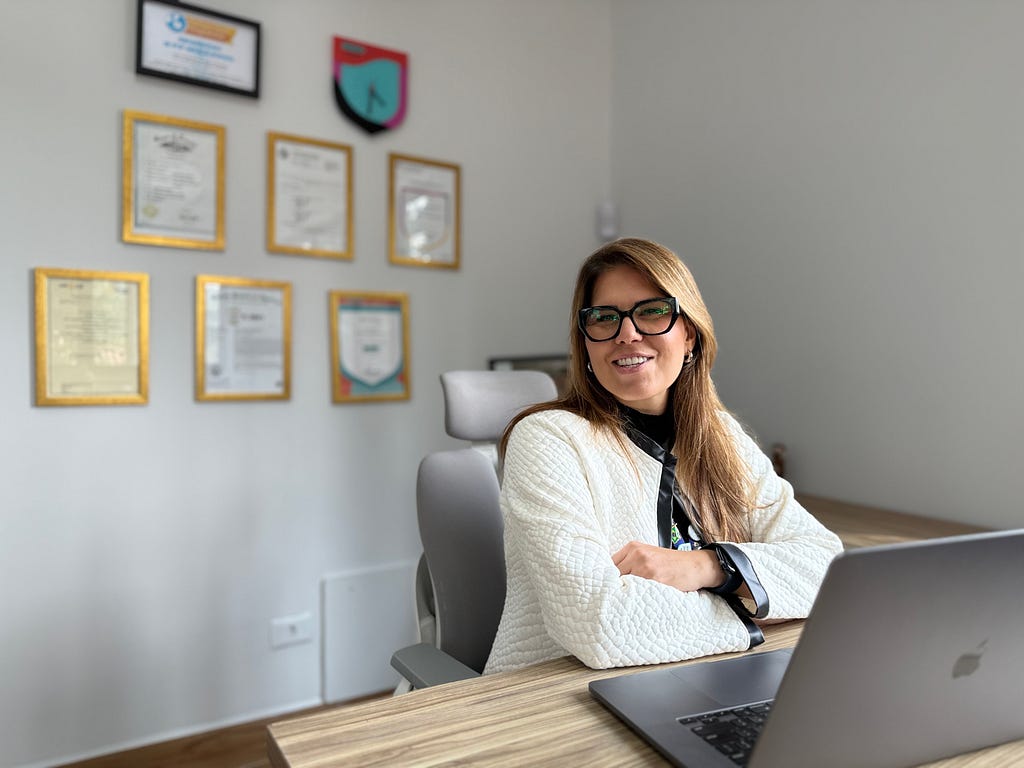
Vanessa Moschetti of St John’s International School: Why We Need More Women Founders & Here Is What We Are Doing To Make That Happen
Empowerment is not theoretical. It happens through opportunity and responsibility.
As a part of this series, we had the pleasure to interview Vanessa Moschetti.
Vanessa Moschetti is a Brazilian lawyer, educator, and Headmistress of St. John’s International School. She is the visionary behind the development of the IELS (International English Learning System), an internationally structured educational model created in England and applied globally. With a strong focus on international education, leadership, and innovation, she leads the expansion of a systemic, trilingual academic model that integrates IB, Cambridge, and national curricula.
Thank you so much for doing this with us! Before we dig in, our readers would like to get to know you a bit more. Can you tell us a bit about your “backstory”? What led you to this particular career path?
My journey in education began very early. During high school, I was already teaching English and Mathematics, and I completed a formal teaching certification, which gave me my first structured experience in education. My first academic specialization was in English Language and British Literature in England, at Oxford. Later, when I returned to Brazil, I pursued a degree in Law. After completing my law degree, I deepened my path in education, studying Pedagogy, postgraduate programs, and specialized training in curriculum design and implementation. From that point forward, my work in education became increasingly structured and intentional, leading me into the field of international education. What led me to this career was a deep understanding that education is one of the most powerful systems for transformation. Over time, I chose to focus entirely on building an international, systemic, and future-oriented educational model.
Can you share the most interesting story that happened to you since you began your career?
One of the most meaningful moments in my career was seeing our school officially become an IB (International Baccalaureate) World School after nearly a decade of development, restructuring, and persistence. It was not just a certification, but the validation of a vision. Watching students, teachers, and families grow into that mindset made it clear that building something consistent over time truly changes lives.
Can you share a story about the funniest mistake you made when you were first starting? Can you tell us what lesson you learned from that?
In the early stages, I tried to do everything myself, from academic planning to operations and communication. At one point, I was managing details that should never have been centralized in one person. It wasn’t funny at the time, but looking back, it was a classic mistake: confusing control with leadership. The lesson was clear: building strong teams is not optional. It is the foundation of any sustainable organization.
None of us are able to achieve success without some help along the way. Is there a particular person who you are grateful towards who helped get you to where you are? Can you share a story about that?
I have been fortunate to work alongside professionals who believed in the vision even before it was fully formed. But I would say that the most impactful support came from those who challenged me, not those who simply agreed. There were moments when strategic decisions required courage, and having people who questioned, refined, and strengthened those decisions made all the difference.
Is there a particular book that made a significant impact on you? Can you share a story or explain why it resonated with so much?
Rather than a single book, what shaped me most was studying educational philosophies: from constructivism to international curriculum frameworks. Understanding how knowledge is built, not just transmitted, has transformed how I see learning. It shifted my focus from content delivery to cognitive and systemic development.
Do you have a favorite “Life Lesson Quote”? Do you have a story about how that was relevant in your life or your work?
“Consistency builds credibility.” This has been central in my work. In education, especially, results don’t come from isolated actions, but from sustained, aligned effort over time. Everything we built at St. John’s reflects that principle.
How have you used your success to make the world a better place?
Through education. It is the most powerful multiplier. By creating an international, accessible, and structured system, we are not only preparing students academically but also developing critical thinkers, communicators, and globally minded individuals.
Ok, thank you for that. Let’s now jump to the primary focus of our interview. According to this EY report, only about 20 percent of funded companies have women founders. This reflects great historical progress, but it also shows that more work still has to be done to empower women to create companies. In your opinion and experience what is currently holding back women from founding companies?
There are three main barriers: Structural limitations: access to capital and networks is still uneven. Cultural expectations: women are often expected to balance roles that are not equally demanded from men. Internal barriers: many highly capable women underestimate their readiness. It’s not a lack of competence. It’s a combination of systemic and cultural constraints.
Can you share with our readers what you are doing to help empower women to become founders?
Through leadership and example. By building and leading institutions, mentoring other women, and creating environments where women take on strategic roles, decision-making positions, and ownership of projects. Empowerment is not theoretical. It happens through opportunity and responsibility.
This might be intuitive to you, but I think it will be helpful to spell this out. Can you share a few reasons why more women should become founders?
Because diversity improves decision-making. Because women bring long-term, systemic perspectives. Because representation changes what future generations believe is possible. And because talent should never be limited by gender.
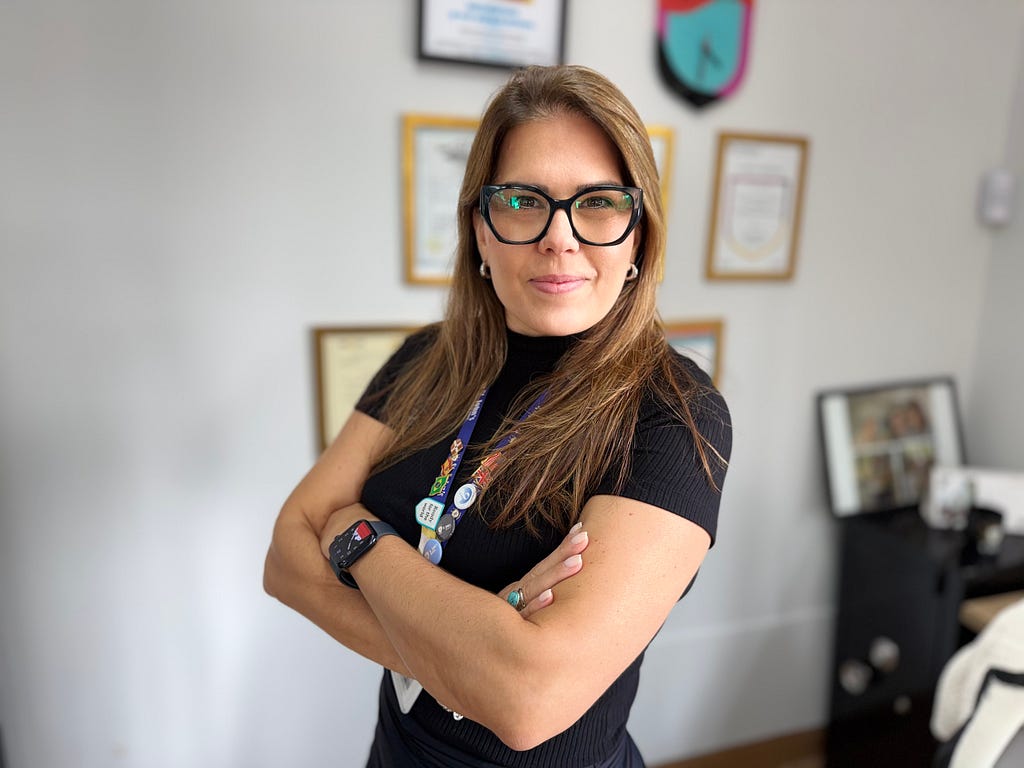
Ok super. Here is the main question of our interview. Can you please share 5 things that can be done or should be done to help empower more women to become founders? If you can, please share an example or story for each.
1. Access to education and training
Women need access to high-level knowledge in business, finance, and leadership early on.
2. Mentorship and role models
Seeing other women leading real organizations changes perception and ambition.
3. Access to capital
Funding structures need to become more inclusive and less biased.
4. Support networks
Strong professional networks reduce isolation and accelerate growth.
5. Cultural shift in leadership perception
Leadership must be recognized beyond traditional (often male-centered) models.
You are a person of great influence. If you could inspire a movement that would bring the most amount of good for the greatest number of people, what would that be?
A movement focused on transforming education into a truly global, interdisciplinary, and future-oriented system. If we change how people learn, we change everything else.
We are very blessed that some very prominent names in Business, VC funding, Sports, and Entertainment read this column. Is there a person in the world, or in the US with whom you would love to have a private breakfast or lunch with, and why?
I would value a conversation with someone deeply involved in global education systems or large-scale innovation, particularly individuals working at the intersection of education, technology, and policy. Because that is where real transformation happens.
How can our readers further follow your work online?
Through St. John’s International School channels and our academic initiatives, as well as through our institutional platforms and educational programs. Our website is: https://www.stjohns-brazil.com/?locale=en Instagram: https://www.instagram.com/st.johns/?hl=pt-br
Thank you for these fantastic insights. We greatly appreciate the time you spent on this.
Vanessa Moschetti of St John’s International School: Why We Need More Women Founders & Here Is What… was originally published in Authority Magazine on Medium, where people are continuing the conversation by highlighting and responding to this story.