

Education Revolution: Leah Moore Of Loving You Big On Innovative Approaches That Are Transforming Education
An interview with Dr. Bharat Sangani
“I would not change you for the world, but I would change the world for you.”
The landscape of education is undergoing a profound transformation, propelled by technological advancements, pedagogical innovations, and a deepened understanding of learning diversities. Traditional classrooms are evolving, and new modes of teaching and learning are emerging to better prepare students for the complexities of the modern world. This series will take a look at the groundbreaking work being done across the globe to redefine education. As a part of this interview series, we had the pleasure to interview Leah Witman Moore.
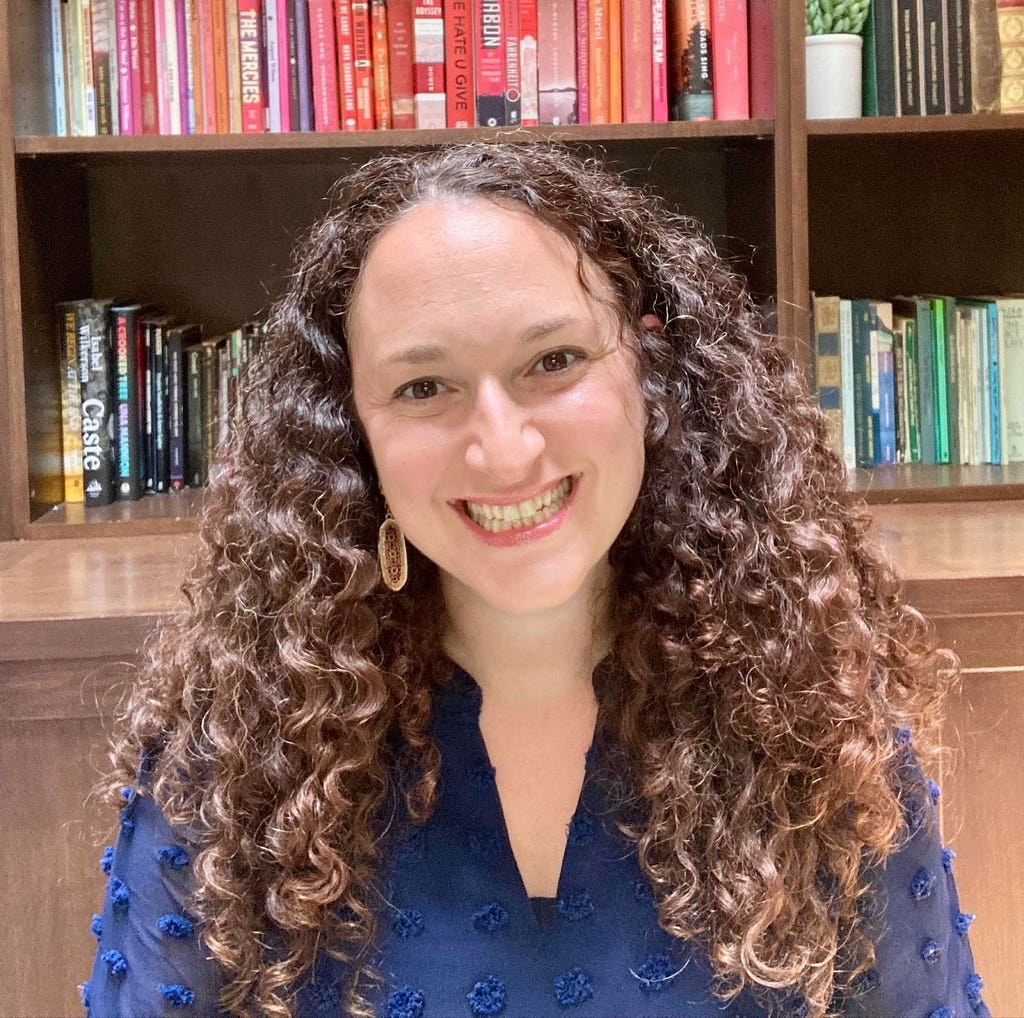
Leah Witman Moore has been teaching English and Theater in New York for 20 years. She is the author of the memoir Loving You Big: One Family Embracing the Unexpected and the novel The Bond Street Detectives. She has been a guest on popular media outlets, including Forbes and ESPN, working to create more stories that center around individuals with disabilities. She lives in New York with her husband and three children, hoping that the world can love bigger one story at a time.
Thank you so much for joining us in this interview series! Can you share the most interesting story that happened to you since you started your career? Can you tell us what lesson you learned from that?
I have had the privilege of teaching an Adaptive Theater class for almost the past decade, using storytelling as a tool to support neurodiverse students. With the support of my school, I worked to build a structure where neurotypical students would partner with this class to co-construct a play which we would perform for the larger student body. When I selected a show, I knew it had to be more than just a play. It needed to highlight what is possible when authentic inclusion happens, celebrating individual communication, activating agency, and showcasing the talents of the students. Throughout this process, I learned how to create a student-centered production where students were the leaders. In this production, we had students creating library installations, original choreography, musical scores, direction, and costuming. To me, this production represents what happens when a community truly works together. It shows what is possible when we celebrate individuality, support diverse ways of communicating, and listen deeply to one another. What I learned is that when people understand their why and know what promotes them to work together, we can change systems to create spaces where all children are heard, seen, and valued.
Can you briefly share with our readers why you are an authority in the education field?
I have been teaching for twenty years as a high school English and Theater teacher. I earned my undergraduate degree in English Education from the University of Wisconsin, where I first learned how inquiry-based learning can create truly student-centered classrooms. I later completed a Master’s in Educational Theater from New York University, where I deepened my understanding of how the arts can activate student voice and engagement. Most recently, I earned a second master’s degree in Educational Leadership from Bank Street College, focusing on building systems that support equity for all learners. While these experiences have shaped my practice, my greatest education has come from the students I have had the privilege of teaching over the past two decades. Each year, about 100 new students walk into my classroom, and it is both my challenge and my joy to learn what motivates them and what they need to grow into confident readers, writers, and thinkers.
Can you identify some areas of the US education system that are going really great?
We are currently at a turning point in the US Education system where we need to continue to fight for the importance of teacher education programs, and prepare teachers with the tools to create access and equity for their students. I celebrate the teachers around the country who are integrating choice into their classroom, choosing relevant and thought-provoking texts, and helping students to not just learn an answer, but to question it. This is what creates a system of lifelong learners, which I believe is the key to the next generation.
Can you identify the key areas of the US education system that should be prioritized for improvement? Can you explain why those are so critical?
If done correctly, education can be the great equalizer. However, without leaders who understand how to allocate funds to promote and support educational programs that emphasize equity, we are not only spreading the message about whose voices matter but also losing the progress that the generations before us have worked to fight for. We need access for all students. We need accessibility for students. We need programs that support early literacy, emphasize mental health needs, and create opportunities for all students, regardless of ability, socio-economic status, ethnicity, gender, sexual orientation, or language acquisition. It requires a dedication to the art and science of teaching to navigate the maelstrom we are all enduring now. I believe we are in the midst of an educational crisis, and I am committed to addressing it every day in my classroom and through the stories I write and amplify.
Please tell us all about the innovative educational approaches that you are using. What is the specific problem that you aim to solve, and how have you addressed it?
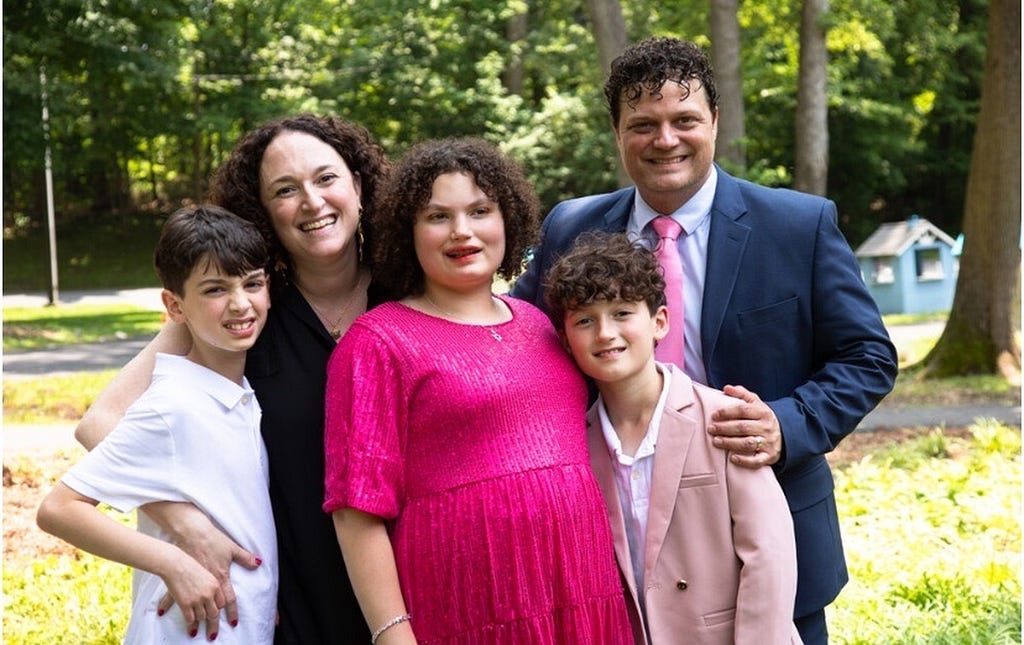
I wanted to transfer the work I am doing in my school to promote inclusivity to a larger audience. That is why I have dedicated my life to advocating for individuals with disabilities and interrupting the negative narratives that have historically been associated with this population. The birth of my daughter, Jordan, revealed she may never walk or talk due to a rare chromosomal disorder, cri du chat. Without understanding why I hoped I could love the disability out of my child and that my resourcefulness could discover the right experts to help her find her way in the world. But with the introduction of sign language, countless laps around the living room in a walker, and daily wig-clad dance parties, I learned there was nothing about Jordan that needed to be fixed. It was the world around her that needed to change. My work started as a blog www.lovingyoubig.com, and grew with international appeal in over 57 countries. I then wrote the memoir, Loving You Big, to reframe how individuals understand individuals with neurodiversity. For my newest project, I have written a middle-grade novel, The Bond Street Detectives (Warren Publishing) about three friends in 5th grade who love solving mysteries. One of these three friends, Maddie, has an intellectual disability, but her challenges are not the main focus of the story. This novel shifts the narrative around stories involving children with disabilities from being about the disability to just being part of kids’ everyday life. Due to the way most American public schools are structured, most students do not encounter a child with significant special needs until middle school, if at all. In fact, their understanding of disabilities is often based on what they read versus personal interaction. Positioning a character with disabilities as a hero will allow children with disabilities to see themselves included in the action. Through the power of books such as The Bond Street Detectives, educators, parents, and children can begin to open their minds to engaging more with people who are intellectually disabled and becoming a more inclusive society. I pulled on her own knowledge of pedagogy as she wrote the book. The classrooms in the novel are designed with an inclusion model, co-teachers, and aids to support the needs of each individual student. While the reader is learning about the plot development, a teacher would be able to pull out learning goals, introductory warm-ups, and even differentiated assessments to support diverse students in the classroom. This is revolutionary for a book about disabilities, as they are usually in a separate educational space based on our country’s inclusion model. There are even lesson plans for educators or access on my website to promote these concepts in their own classrooms. As the detectives learn in the novel, we all have to “look closer” at the world around us to see what opportunities for inclusivity we can expand.
In what ways do you think your approach might shape the future of education? What evidence supports this?
Individuals with disabilities have historically been depicted as characters who promote fear, ostracization, and pity. From Shakespeare’s Richard III to Dickens’s Tiny Tim, these popular characters are reinforcing stereotypes, even in modern society. While there has been movement in this field, characters with disabilities are traditionally included in stories to serve a limited purpose in a text, create conflicts, or develop themes. The Bond Street Detectives is interrupting these narratives. Although social contact has been shown to be most effective in reducing stigma and negative attitudes towards persons with intellectual disabilities, due to the current inclusion model in the United States, many children will not meet someone with an intellectual disability until they are in middle school. Therefore, children are learning more about disabilities from the texts they are consuming. Research in this field argues that people are more likely to adopt attitudes about disability from books more than personal interaction. Therefore, it is imperative that students are reading about characters that are not just in the text to evoke pity or propel other characters to change. With more authentic depictions of individuals with disabilities in a text, children can extend their new understandings to interactions with children in their own lives, increasing inclusion and empathy in the world.
How do you measure the impact of your innovative educational practices on students’ learning and well-being?
I see the impact of this work in the risks students take. I see it when a student who once hesitated to speak chooses to deliver a line in front of the entire cast. I see it when a student raises their hand to share an idea in class, trusting that their voice matters. I see it when someone volunteers to become a writing fellow, stepping into a leadership role to help others develop their ideas and stories. I see it when someone tries a dance step, a song, or a new form of communication for the very first time, or when a student uses sign language to help tell a story so that more voices can be heard. These moments may seem small, but they represent courage, trust, and the growing confidence that comes from being part of a supportive community.
What challenges have you faced in implementing your educational innovations, and how have you overcome them?
As I have learned in this work, it is very difficult to change the hearts and minds of people. To shift a culture requires careful and thoughtful planning. I explain the goals of inclusivity in three areas:
- Consider the narratives we have been exposed to to interrupt the implicit biases we hold: What texts am I exposed to? What stories do I surround myself with? The narratives we consume — through social media, radio, books, and everyday conversations — quietly shape the way we understand the world. As Dr. Beverly Tatum reminds us, people often move through life like “smog-breathers,” absorbing ideas and assumptions without realizing it; they do nothing intentionally to breathe the smog, they simply live in it. This reflection challenges me to audit the stories I take in and the voices I choose to follow. It also requires awareness of how I show up in these spaces, avoiding the trap of “savior mode” or sympathy, and instead approaching others with genuine empathy.
- Create more opportunities for inclusion and representation in stories. Research by Mitchell and Snyder suggests that many people form their attitudes about disability not from real relationships but from the texts and stories they encounter, where disabled individuals are often portrayed as pitiable, burdensome, or objects of ridicule or violence. Because of this, it becomes essential to seek out both window and mirror texts — stories that allow us to see into other lives while also recognizing ourselves — especially within systems that shape society, such as education. At the same time, I must remain mindful of stagnancy and the silencing of voices within these systems.
- Activating agency — Real change requires noticing where I hold power or agency and using it to create space for more inclusive narratives. As Loretta Ross explains, progress often begins with “calling in,” a practice of speaking up in ways that invite growth rather than tearing others down. Through reflection, intentional listening, and the courage to engage in difficult conversations, we can begin to shift the stories that shape our communities.
When I finished my leadership training, we were advised to lead with a truth statement to keep up centered. Here is mine: Students must enter a space that cultivates agency, practices inclusivity, and employs culturally responsive practices. Educators must be reflective practitioners to engage in deep and critical thinking to grow their mindset and challenge implicit bias. Educational spaces must be designed to invite, amplify, and engage a diversity of ideas, authenticating the identity and engagement of a student. The school and all its stakeholders actively strive to create a space where risks are taken, knowledge is co-constructed, and joy is tangible. This work is purposeful, collaborative, and not done in solitude; to be achieved, we must remember that this work “is the work of generations.”
Keeping in mind the “Law of Unintended Consequences,” can you see any potential drawbacks of this innovation that people should think more deeply about?
True inclusivity cannot be performative. It is not as simple as placing children in the same room and assuming a connection will naturally occur. Inclusion is not about asking students to change who they are in order to fit a space that was never designed for them. Instead, it requires us to change the space itself. Truly inclusive environments are intentionally built so that every individual can access the environment, the content, and the skills at their own level of readiness. When we design spaces this way, belonging is no longer accidental; it is possible for everyone. I believe this can be achieved through sensitivity training, addressing implicit biases, and continuing to educate ourselves and one another with more stories. I believe all students have the desire to learn. We lose them when we force them into systems and spaces that do not honor their voice, validate their identity, or recognize the ways they naturally engage with the world. When students cannot see themselves reflected in their learning or feel that their way of thinking and communicating is unwelcome, curiosity fades. Our responsibility as educators is not to shape students into a single mold, but to create environments where their voices matter, their identities are respected, and their ways of learning are seen as strengths rather than barriers.
What are your “5 Things I Wish I Knew When I First Started”?
1. The strongest lessons are the ones the students shape
2. My success as a teacher is measured by how included and empowered my students feel.
3. Reflection is the key to growth.
4. Find, maintain, and show gratitude for the mentors in your life.
5. Always retain your sense of humor.
Can you please give us your favorite “Life Lesson Quote”? Can you share how that was relevant to you in your life?
Without understanding why, I hoped I could love the disability out of my child and that my resourcefulness could discover the right experts to help her find her way in the world. But with the introduction of sign language, countless laps around the living room in a walker, and daily wig-clad dance parties, I learned there is nothing about Jordan that needs to be fixed. It is the world around her that needs to change. I use this quote to remind me of my larger purpose. “I would not change you for the world, but I would change the world for you.” — Amy Wright, 2017 CNN Hero of the Year
We are blessed that some of the biggest names in Business, VC funding, Sports, and Entertainment read this column. Is there a person in the world, or in the US, with whom you would love to have a private breakfast or lunch, and why? He or she might just see this if we tag them 🙂
Michelle Obama
How can our readers further follow your work online?
@lovingyoubig or www.lovingyoubig.com I love to hear and promote stories of other people! Come say hi!
Thank you for sharing these insights!
About The Interviewer: Dr. Sangani (“Doc”) is a thriving cardiologist, business owner, husband, father and friend. His latest venture — LifeRx — is a community committed to helping growth-minded professionals create happiness through the pillars of health, wealth and connection.
Education Revolution: Leah Moore Of Loving You Big On Innovative Approaches That Are Transforming… was originally published in Authority Magazine on Medium, where people are continuing the conversation by highlighting and responding to this story.