Leadership is the conscious choice to act with integrity in the face of fear, and to remain anchored in one’s moral convictions even when such convictions come at great personal cost.
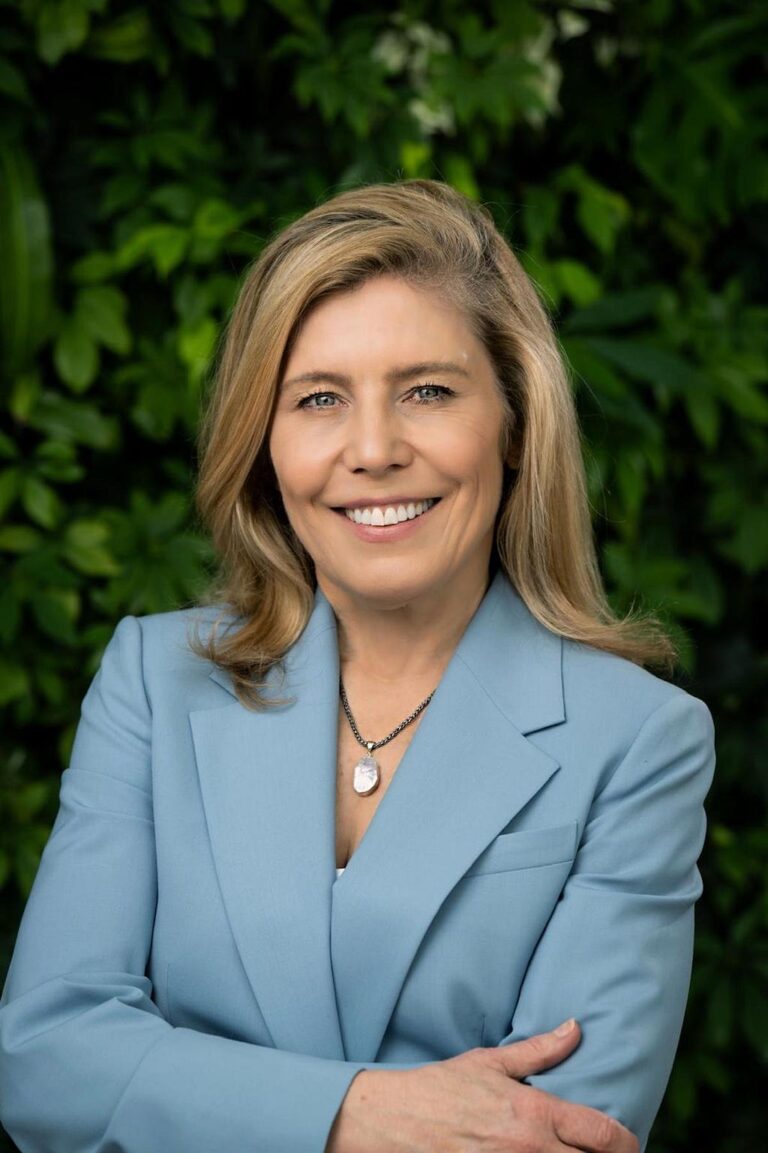
As part of my series about “authors who are making an important social impact”, I had the pleasure of interviewing Greta Uehling.
Greta Uehling is a cultural anthropologist who works at the intersection of Indigenous and Eastern European Studies. She is a Teaching Professor at the University of Michigan in Ann Arbor, where she teaches for the Program in International and Comparative Studies and is Associate Faculty of the Center for Russian, East European and Eurasian Studies. Uehling is the author of three books: Beyond Memory: The Deportation and Return of the Crimean Tatars (Palgrave 2004), Everyday War: The Conflict over Donbas, Ukraine (Cornell University Press 2023), and Decolonizing Ukraine: The Indigenous People of Crimea and Pathways to Freedom (Rowman & Littlefield 2025). Throughout her career, Uehling has served as a consultant to organizations working in the fields of international migration, human rights, and human trafficking, including the United Nations High Commissioner for Refugees.
Thank you so much for joining us in this interview series! Before we dive into the main focus of our interview, our readers would love to “get to know you” a bit better. Can you tell us a bit about your childhood backstory?
I grew up in Madison, Wisconsin where my family lived near the University of Wisconsin’s graduate student housing. As a result, my primary school classmates came from all over the world. That early exposure to different cultures was formative. Looking back, was especially drawn to the kids from other countries: I wanted to befriend them and understand their perspectives. From that experience, I developed a lasting appreciation for the many ways people live and see the world. I also learned early on that openness and curiosity — not sameness — are key ingredients of friendship.
These childhood insights took on sharper definition and found theoretical expression when I went to college and started taking anthropology classes. Anthropology attracted me because it was a way to learn about people and places through a methodology — direct participation — that made sense to me. As a cultural anthropologist, I learn from peoples’ stories, and my firsthand experience in a society. Experiences are important because they lead to what anthropologists call “situated knowledge.”
Situated knowledge is the idea that all knowledge reflects the conditions in which it is produced, and the social identities of the knowledge producers. My new book, Decolonizing Ukraine, is a case in point because I include my experiences in my writing. In short, anthropologists learn, write, and speak as both observers and participants and the beauty of anthropology from my perspective, is that it affords people with tools to step inside other peoples’ worlds to learn experientially.
When you were younger, was there a book that you read that inspired you to take action or changed your life? Can you share a story about that?
A book that inspired me in childhood was From the Mixed-Up Files of Mrs. Basil E. Frankweiler. The story follows two children who run away from home to, of all places, the Metropolitan Museum of Art. Like good anthropologists, they studiously blend in with other museum goers. When the museum is closed in the evening, they bathe in the fountains; sleep in antique beds on exhibit; and gather wishing coins to spend on hot dogs and French fries in the museum cafeteria during the day. In the midst of their newfound routine, a statue of an angel appears.
Museum curators suspect the sculptor is Michelangelo, but they are unable to verify this. The children research the sculpture at the Met, in the library, and eventually in the vast, disorganized files of the person who put the piece up for auction in the first place — a Mrs. Basil E. Frankweiler. Although preliminary analyses had been inconclusive, the children help establish that the angel is, indeed, by Michelangelo.
In this book, author E. L. Konigsburg, beautifully captures the intellectual excitement of having a pressing question, and the thrill of wading through clues in pursuit of answers. The story stayed with me because it showed me two people who went on a real adventure and overcame considerable doubt and uncertainty to reach a conclusion. And like anthropologists, they had to leave home to find home: at the end of the story, Mrs. Basil e Frankweiler reunites the children with their parents and they see home with fresh eyes.
Can you describe how you aim to make a significant social impact with your book?
The Russian war on Ukraine represents an existential crisis for Ukraine and the rules-based international order that secured peace in Europe for eight decades. As such, the outcome has profound implications for the entire globe.
A great deal has been written about Russia’s war on Ukraine. Social scientists, however, are coming to the conclusion that area studies programs have been focused on Russia at the expense of developing adequate knowledge of Ukraine. This tendency is mirrored in foreign policy circles and government agencies, where the officers and staff are predominantly Russia specialists.
Efforts are underway to rectify this imbalance, but progress has been slow, and it is curious that the publications seeking to illuminate modern Ukraine stop short of illuminating Ukraine’s relation to its Indigenous people. After all, for most of its history as an independent country, Ukraine treated the Indigenous people not unlike the Soviet Union had. The blind spot with regard to Indigenous people is a knowledge gap that the book seeks to fill.
It is important for people to know that the Crimean Tatars comprised the vast majority of the population of Crimea (over 95%) prior to imperial colonization in the 18th century, and the Russian and Ukrainian presence was quite small until after the Crimean wars in the 19th century. The Crimean Tatars were then ethnically cleansed from the territory by Soviet authorities in the 20th century. In the 21st century, independent Ukraine lacked the will and the resources to support their repatriation and did not extend meaningful social and political inclusion. Decolonizing Ukraine describes how Ukraine changed course after the 2014 occupation of Crimea. Crimean Tatars and other Ukrainians found common cause in repelling Russia’s advances and now enjoy far greater social cohesion.
This represents a significant development and Decolonizing Ukraine, therefore repositions Crimea and Crimean Tatars from a side note to the center of the history, politics, and culture of Ukraine.
What was the “aha moment” or series of events that made you decide to bring your message to the greater world? Can you share a story about that?
One of my revelatory moments came toward the beginning of my fieldwork during a conversation with an advocate for the Crimean Tatar people who had fled Russian-occupied Crimea. “Salim” spoke about how, paradoxically, the repeated attempts to suppress his people had made them more creative and resilient. He believed this creativity had become a vital asset in their resistance to Russian aggression against Crimea.
“To think creatively,” he told me, “a person has to constantly expand their worldview. Russia knows very well it cannot compete with us on that level. So it resorts to physical destruction.” What Salim recognized in 2015, Russia’s intent to erase Ukrainian identity and sovereignty, would only become widely apparent years later.
For Salim, embracing agency meant viewing a risk-filled environment not as a threat, but a catalyst. He described how his people had long drawn strength from their inner worlds, “A people may be deported a hundred times,” he said, “but if they keep their abundance of ideas, they will survive.” These words capture his idea of resilience.
Without sharing specific names, can you tell us a story about a particular individual who was impacted or helped by your cause?
I see my mission as raising awareness about Ukraine — its history, its sovereignty, and the experiences of its Indigenous peoples. This advocacy has a ripple effect across different audiences: from my students at the University of Michigan, to attendees at public events, and to readers who engage with this book, Decolonizing Ukraine as well as two previous books, Everyday War and Beyond Memory.
I also use my social networks to offer tangible help when I can. While I was writing up my findings in the United States, I was contacted by a friend back in Crimea whom I hadn’t heard from in some time. In 2022, she reached out because her “nephew” — a term she used loosely, as the familial relationship was more complex — was living in a refugee camp near the southern border of the U.S.. She and her entire family had always had a strong attachment to Crimea, so I knew his decision to flee must have come under dire circumstances.
I soon learned he was seeking to avoid military conscription into the Russian army. The conscription on occupied territory violated international law, and for him would have meant fighting against a country he loved. I connected him with immigration legal counsel to facilitate his legal entry into the U.S., and arranged for free housing while he searched for work. In 2023, I traveled to the southeastern United States to meet him in person. By that time, he had brought his mother and two sisters.
This young man had his own positive ripple effect. As I describe in more detail in my book, he adhered to the ethical code of Islam, which emphasizes honesty, hospitality, and service. In Poland, he and his friend and traveling companion volunteered at humanitarian shelters — stocking supplies and using their language skills to guide Ukrainian women and children to safe housing, even as they themselves were ineligible for shelter and slept in a local mechet (mosque).
When they arrived in Mexico, they declined the opportunity to rest and instead returned immediately to the airport, where they helped greet incoming flights of Ukrainian refugees. They directed new arrivals to food, shelter, and medical care, often personally accompanying elderly or infirm individuals to ensure they reached designated hubs.
By his estimate, he personally assisted several thousand Ukrainian migrants. He became a human hub in an evolving network of displaced people. Some of those he helped may receive asylum, others may be paroled into more permanent legal statuses, and some may return or resettle elsewhere — but for a time, they were all connected by his moral compass and commitment to service.
Are there three things the community/society/politicians can do to help you address the root of the problem you are trying to solve?
There are two. The first is that Americans need to more fully acknowledge the contributing role the United States played in causing the war. After all, it was the U.S. that staunchly advocated for Ukraine to give up its nuclear weapons, leading to a serious imbalance in power between Russia and other formerly Soviet states.
Such an acknowledgement would facilitate a second step: the formulation of a more robust policy response that provides meaningful support for Ukraine. If Ukraine has the support it needs to genuinely defend itself, it will make all of Europe and the United States more secure.
How do you define “Leadership”? Can you explain what you mean or give an example?
Leadership is the conscious choice to act with integrity in the face of fear, and to remain anchored in one’s moral convictions even when such convictions come at great personal cost. A formidable embodiment of this kind of leadership that I describe in my book is Nariman Dzhelyal, a Crimean Tatar leader who chose to remain in Crimea after the Russian occupation. Fully aware of the risks, he continued his political and civic engagement, determined to represent his people despite the growing repression under the de facto Russian authorities.
At a time when even traveling to and from Crimea is fraught with danger, Dzhelyal left the peninsula to speak at a high-level meeting in Kyiv, where he reported on the worsening human rights situation. Upon his return, he was arrested and falsely charged with terrorism. He was sentenced to 17 years in prison — an effective death sentence in a country where incarceration often entails brutal and inhumane conditions.
Yet even behind bars, Dzhelyal refused to capitulate. He did not confess to crimes he didn’t commit, and he continued to serve as a source of inspiration and moral leadership for his community. In one public address from prison, he reminded the people of Crimea that even in a state of captivity, inner freedom is still possible. He called on his people to preserve hope and to remember the legacy of earlier generations of Crimean Tatars who resisted Soviet oppression with dignity.
Dzhelyal’s leadership is defined by moral clarity, emotional fortitude, and an unshakable commitment to justice. Thankfully, Dzhelyal was eventually released as part of a prisoner exchange and now serves as Ukraine’s ambassador to Turkey — a continuation of his lifelong dedication to leadership.
Is there a person in the world, or in the US with whom you would like to have a private breakfast or lunch with, and why? He or she might just see this, especially if we tag them.
I would be very interested in the opportunity to meet President Zelensky. His leadership during a time of war has been exemplary, marked by clarity of vision and moral courage. In particular, I would be eager to ask him about his thinking regarding the inclusion of Crimean Tatars in Ukraine’s political process. Under his presidency, the Ukrainian Parliament officially recognized the Crimean Tatars as an Indigenous People and acknowledged the 1944 deportation as an act of genocide. He also established the Permanent Mission of the President of Ukraine in the Autonomous Republic of Crimea to provide expert counsel on Crimean Tatar issues, and to develop strategies for the region’s demilitarization and eventual de-occupation. Furthermore, his administration created the Crimean Platform, an international diplomatic initiative that brings together global leaders to address the future of Crimea.
That said, I would be reluctant to impose on President Zelensky’s time, given the immense pressures he faces during wartime. Another figure I would value the chance to speak with is historian Timothy Snyder. I admire his contributions to the understanding of Eastern Europe and Ukraine, but I would like to ask why Ukraine’s Indigenous peoples are notably absent from his lecture series on modern Ukraine at Yale — especially considering that the series addresses themes such as famine, terror, colonization, and ethnic cleansing, all of which are directly relevant to the Crimean Tatar experience.
How can our readers further follow your work online?
Website: gretauehling.com
Instagram: greta.uehling
Bluesky: @uehling.bsky.social
LinkedIn: Greta Uehling, PhD
This was very meaningful, thank you so much. We wish you only continued success on your great work!
Social Impact Authors: How & Why Author Dr. Greta Uehling Is Helping to Change Our World was originally published in Authority Magazine on Medium, where people are continuing the conversation by highlighting and responding to this story.