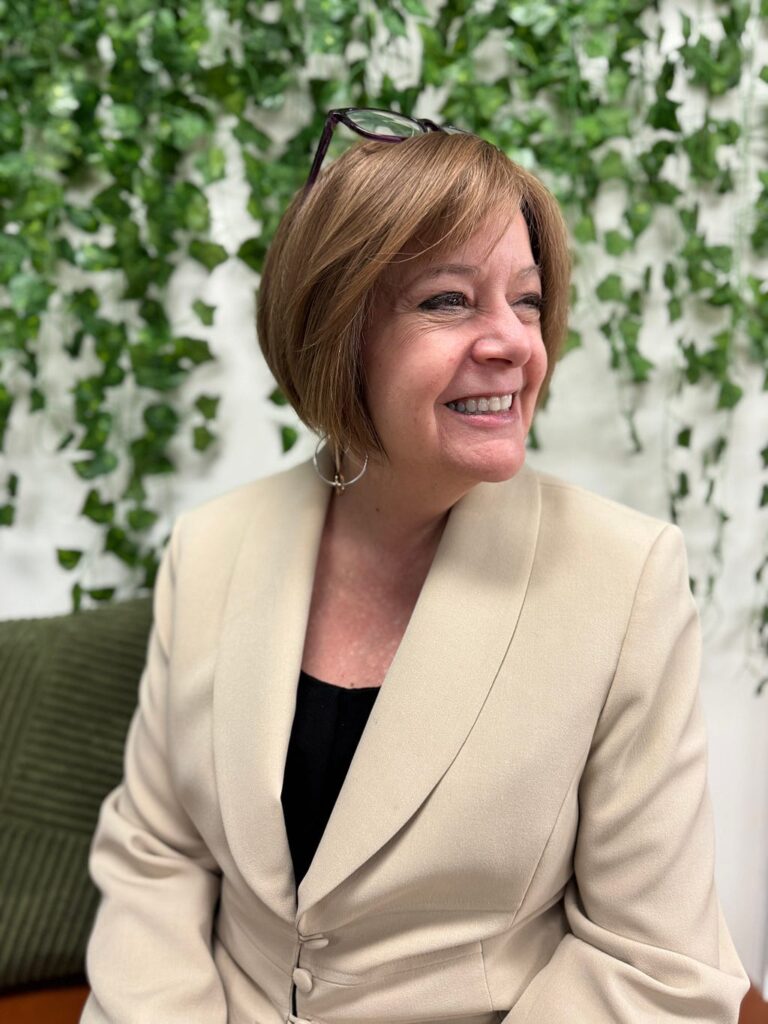
Impactful Communication: Barbara Werner Of Lucinda Ellery Inc On 5 Essential Techniques for Becoming an Effective Communicator
An Interview With Athalia Monae
Posture and Presentation — How you present will affect how they perceive you and how closely they listen to you. It sounds rudimentary but stand or sit straight. Level shoulders. Eye contact. Hair and Make Up spot on.
In an age dominated by digital communication, the power of articulate and effective verbal communication cannot be understated. Whether it’s delivering a keynote address, leading a team meeting, or engaging in a one-on-one conversation, impactful speaking can open doors, inspire change, and create lasting impressions. But what truly sets apart an effective communicator? What techniques and nuances elevate a speech from mundane to memorable? As part of this series, we had the pleasure of interviewing Barbara Werner.
She has brought 9 companies from start up to profitability and from profitability to expansion. Just this year she joined Lucinda Ellery Inc and the Director of US Operations.
Lucinda Ellery creates fully customized hair systems for women who are facing hair loss and do it in a salon-like atmosphere. Whether their hair loss is caused by chemotherapy, trichotillomania, alopecia areata, or frontal fibrosing alopecia, they custom build a mesh-integrated hair system using their patented technology. The results are amazing.
Thank you so much for joining us in this interview series. Before we dive into our discussion about communication, our readers would love to “get to know you” a bit better. Can you share with us the backstory about what brought you to your specific career path?
Hair loss has never been new to me. I was the one in the family with the “bad” hair. In fact, everyone always told me that I had my grandfather’s hair, unfortunately, the man was bald since I’d known him, so I never actually appreciated the comparison. But in a strange way, it brought me to the hair loss industry.
Can you share the most interesting story that happened to you since you started your career?
I spent 25 years involved in hair and hair loss, primarily in hair transplantation, only to find out that I was not a good candidate for a hair transplant. I have what’s called DUPA (diffuse unpattern alopecia). This basically means I lose hair all over the scalp, not just at the top like you might with male pattern or female patterned baldness.
When I first discussed the expansion of Lucinda Ellery in the US, they did a sample consultation to learn more about their systems and how it works. During the consultation they asked if I would ever consider having a hair system like theirs. It’s a patented mesh integrated system that allows your hair to continue to grow.
I think I was in the chair having it done before I even signed up to work for them.
I tell everyone here that if I quit tomorrow, I will still be a client. At a woman well over 50, I am never going to go back to not having great hair again.
You are a successful business leader. Which three character traits do you think were most instrumental to your success? Can you please share a story or example for each?
For me, the top traits to me are not standalone, they must work in conjunction with other traits.
#1 Integrity and Accountability. Just saying you have integrity is not enough. You must back that up with being personally accountable for your own actions. But that also means you have to hold others accountable for their actions as well.
# 2 — Vision and Adaptability. I have always had an innate ability to “see the train wreck coming”. This makes forecasting industry trends easier for me, but you also need to be able to pivot in real time. Sometimes pivoting is the hardest for people to understand.
# 3 — Abandon. Know what you love and throw yourself into it. If anyone had told me that I would devote most of my life to women’s hair loss, I would have thought they were insane. But that is just how my career has unfolded, and after brief times working in other industries, I have realized that combating hair loss in women is what I love to do.
I understand what it is like not to have hair, or at least not a lot of it, but I also know the fun of having it again. Seeing the look on someone’s face when they first see themselves is incredible. You can tell they feel amazing about their hair again.
Ok, thank you for that. Let’s now jump to the primary focus of our interview. Let’s begin with a basic definition so that we are all on the same page. How would you define an “Effective Communicator?” What are the characteristics of an effective communicator?
In today’s world there is AI for just about everything, being an effective communicator ‘on the fly’ comes at a premium.
Anyone can use ChatGPT or use other AI formats to increase their vocabulary and writing style. Being able to communicate your ideas verbally, reading your audience and being able to pivot yourself to answer the unanticipated questions in real time are key to being an effective communicator.
How can one tailor their communication style to different audiences or situations?
You should always understand your audience. Research and ask questions about your audience age, background, interest level in your subject average educational background? What field are you speaking in? Are you well-versed in the subject matter? Is English their first language?
Can you provide an example of a time when you had to adapt your communication style to reach a particular audience successfully?
I did a presentation years ago at a conference for the International Society of Hair Restoration Surgeons. The topic was in Human Resources modality, and I illustrated the importance of having a well written corporate handbook. HR topics were not usually well attended by surgeons, even those who own private practice.
In presenting it, I had to remember that for all their advanced knowledge and education in their field, this was a topic that most of them knew nothing about. But it was equally important to capture their attention.
As it was the fall of 2015, I titled the seminar in large letters “50 Shades of Gray”
Followed by: How to Bullet Proof Your Corporate Handbook and Protect Against Legal Gray Areas”
We had a full house.
How do you handle difficult or sensitive conversations while maintaining open and effective communication?
Women’s Hair loss is a very sensitive topic. Because of that, I do almost all the US consultations personally because I understand what it’s like. Because I have been in the hair loss industry for so long, I do not have any qualms or hesitation about admitting to my condition and share my before and after photos all the time.
I know that once a person registers that you understand what they are going through firsthand, then it’s just a matter of letting them speak and of listening.
In your experience, how does storytelling play a role in impactful speaking? Why do you think stories are effective in communication?
Stories and humor are a great way to connect with your audience especially if the humor is self-deprecating. I am very open about the topic of hair loss and generally my stories resonate because they are common to many women.
If you have suffered or are suffering from hair loss, then you know the trauma of going to a hair salon. I used to avoid it at all costs. I would tease, flip, spray, and put all kinds of products in my hair, just to have the illusion of hair. And that would be before I went into the hair salon.
Hairstylists often, although well-meaning, take the “fun” out of going to a salon.
So, when I speak with groups about what we do, one of the most important aspects is not that we create hair systems, but that we create them in one day but that we give them a more “normal” salon experience again.
As soon as I express that, you can see a collective sigh occur whether I am speaking on a one-on-one consultation or to a group at an open house.
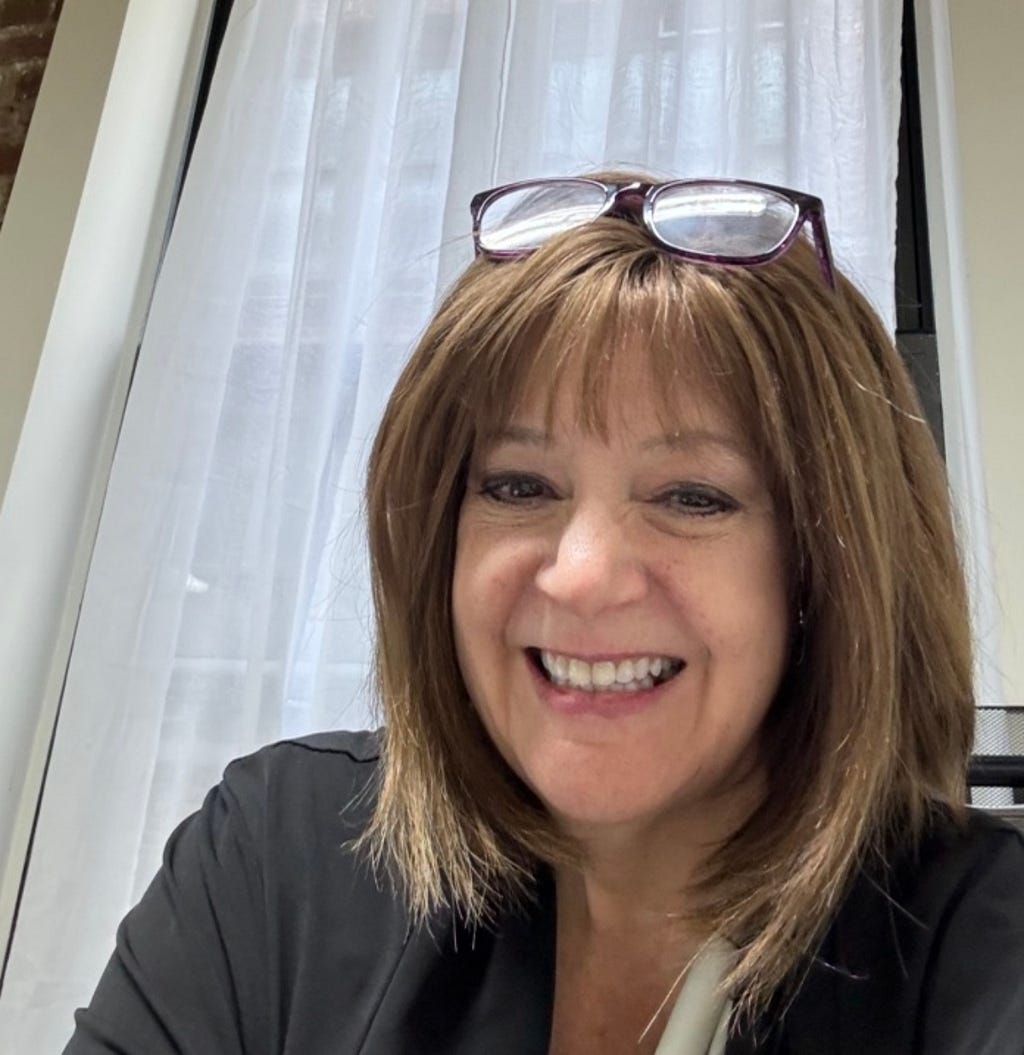
What are your “5 Essential Techniques for Becoming an Effective Communicator”?
5 essentials of being an effective communicator
- Posture and Presentation — How you present will affect how they perceive you and how closely they listen to you. It sounds rudimentary but stand or sit straight. Level shoulders. Eye contact. Hair and Make Up spot on.
- Hear yourself — Practice key points and present them with authority. Get the mirror out and practice!
- Hear the other person — Take that breath and listen to the other person. And most importantly, let them finish their thought before you share your own.
- Research — You cannot speak with authority if you are unsure of your topic. Do your homework.
- Pay attention — Communication is a 2-lane highway not a one-way street. Look at your audience. Make that connection. Listen and respond appropriately.
That’s the best advice I was ever given and the best advice I can give.
How do you integrate non-verbal cues into your communication? Can you provide an example of its importance?
The importance of eye contact, even in a virtual format, because extremely important.
One thing I have done is make sure I use different colors of hair when describing how the system is built.
I will show some hair that represents their natural hair (dark brown for example) and then I will explain the process and show the addition of the system hair (i.e.: in platinum blond). That’s not to say we would change their hair color, but when I put the two together, they can instantly see what I am describing.
When we were using just one-color sample for both the natural and the additional system hair it was very hard to follow during a virtual consultation.
The only way I knew this was to watch the clients’ eyes and expressions. I could see when they were confused and when they understood the concept and they understood much more quickly when the hair colors were contrasting.
How has digital communication changed the way you convey your messages? Are there any specific challenges or advantages you’ve encountered?
As I mentioned, I do most of the consultations in the US myself, whether it is in our NY Studio or for the Los Angeles salon. Because of that, most of the initial consultations are done via Zoom or Facetime. That takes a lot of the non-verbal cues out of the mix. I can’t get a feel for the person’s body language or if their hands are fidgeting and they are not following me.
It also makes it especially difficult for me personally as an Italian woman and Native New Yorker. I am used to describing things with my hands and have to be keenly aware of my body placement during video calls.
Public speaking is a common fear. What techniques or strategies do you recommend to manage and overcome stage fright?
Practice. A lot.
One of the best tricks of the trade: Repeat the question.
If you are asked a question and you are unsure of how you wish to respond, repeat the question back to them. This will give you a moment to collect your thoughts and sometimes that is all you need.
One question I get all the time is:
Question: “What makes your hair system different from a wig?”
On the surface I would have 20 immediate differences, but we all have those moments of brain fog when you can barely remember your name.
So, with this example, I would repeat the question calmly back to them.
Answer: “What makes our hair system different than a wig? That’s a great question. . . “
Suddenly, the brain fog lifts, and I can give the differences easily.
That simple act of repeating the question back can give you a moment to think.
And if it doesn’t come back to you right away? Tell them honestly, I am at a loss right now, I don’t know what just happened to my brain. Or tell them that there are so many differences that you would love to discuss with them privately at another time.
You are a person of great influence. If you could start a movement that would bring the most amount of good to the most amount of people, what would that be? You never know what your idea can trigger. 🙂
We’ve already started.
I think that if every company looks at their goods and services and sees who can benefit and then connects with a charity in that area, it will have a ripple effect.
For Lucinda Ellery, breast cancer awareness, Trichotillomania cooperatives, alopecia areata foundation, these are charities that just made sense to us because most of our clients have hair loss attributed to these conditions. So, for us, participating in these fundraisers reinforces what we do and why we do it. If every company did that, it would be like a “million points of light” on steroids.
How can our readers further follow you online?
Our website is: https://www.lucindaellery-hairloss.com/
Our they can schedule a free consultation with me at: Consultation with Barbara
Thank you for the time you spent sharing these fantastic insights. We wish you only continued success in your great work!
Impactful Communication: Barbara Werner Of Lucinda Ellery Inc On 5 Essential Techniques for… was originally published in Authority Magazine on Medium, where people are continuing the conversation by highlighting and responding to this story.